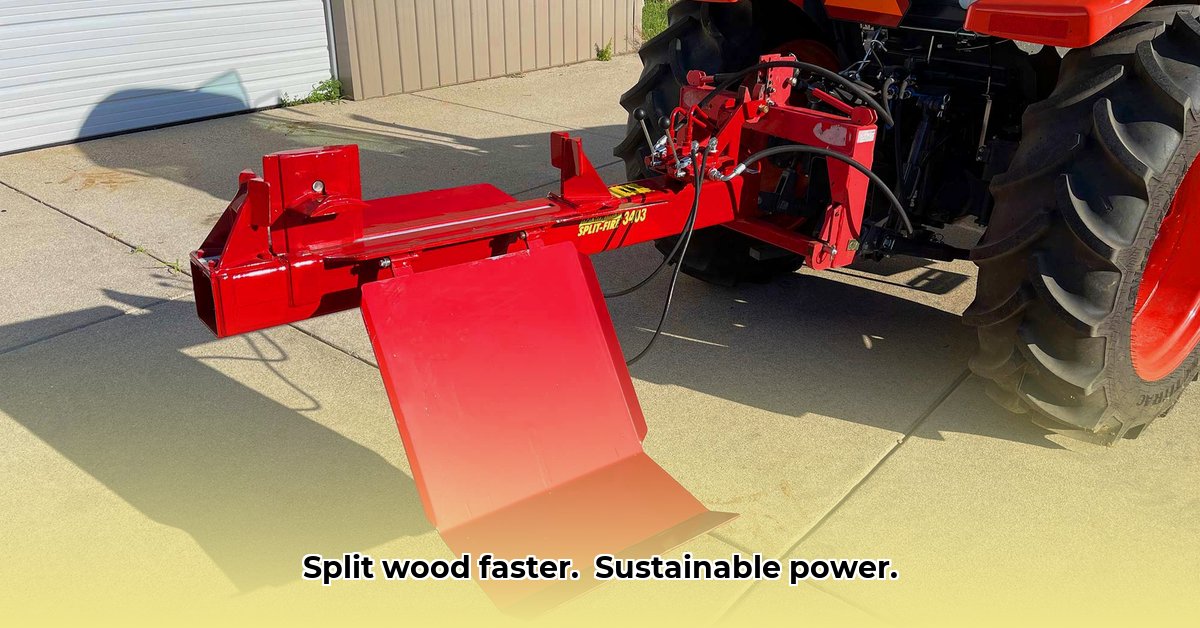
Tired of backbreaking labor splitting firewood? Imagine effortlessly processing your wood using your tractor's power. This guide details how tractor-powered log splitters dramatically improve farm efficiency and sustainability. We'll cover choosing the right splitter, safe operation, maintenance, sustainable practices, economic considerations, and real-world examples. Whether you're a small family farm or a large operation, this is your step-by-step guide to easier, greener firewood processing. For more detailed information, check out this helpful resource on tractor powered splitters.
Choosing the Right Hydraulic Wood Splitter Tractor Combo
Selecting the correct splitter-tractor combination is crucial for efficient operation. Matching the splitter's capacity to your tractor's horsepower and hydraulic flow rate prevents underperformance. Don't attempt to power a large splitter with a low-horsepower tractor; it will result in inefficient and slow operation. Always consult your tractor's manual for its horsepower and hydraulic flow specifications.
Next, decide between a 3-point hitch or PTO (Power Take-Off) model. 3-point hitch splitters are easier to attach and detach. PTO models typically offer more power for heavy-duty splitting. Your choice depends on your tractor's setup and the volume of wood you process. Larger farms with high-volume needs may find PTO models more efficient.
Here's a comparison chart:
| Feature | 3-Point Hitch Splitter | PTO Splitter |
|---|---|---|
| Attachment | Simple, quick hookup | Requires a PTO shaft connection |
| Power Source | Tractor's hydraulic system | Tractor's PTO shaft |
| Power Transfer | Hydraulic lines | Mechanical shaft |
| Typical Capacity | Generally lower; suitable for smaller jobs | Typically higher; ideal for larger volumes |
| Best For | Smaller tractors, lighter workloads | Larger tractors, high-volume wood splitting |
Consult your local equipment dealer for personalized recommendations. They can guide you to the optimal model suited to your farm's size and workload.
Operating Your Hydraulic Wood Splitter Safely and Smartly
Safety is paramount. Always follow the manufacturer's instructions precisely. Before starting, inspect both the tractor and splitter for any damage. Ensure all connections are secure, and hydraulic fluid levels are correct.
Safe operation steps:
- Engage the PTO or hydraulics: Carefully follow your tractor and splitter manuals.
- Position the log: Securely place the log, preventing slippage.
- Activate the splitter: Keep your hands clear of the splitting area.
- Remove split wood: Carefully remove pieces, avoiding contact with moving parts.
- Check for leaks: Regularly inspect hydraulic lines.
- Maintain cleanliness: A clean workspace enhances safety.
Regular maintenance is crucial. This includes checking and replacing hydraulic fluid, lubricating moving parts, and inspecting for wear and tear. Preventative maintenance extends equipment lifespan.
Sustainability: Splitting Wood the Eco-Friendly Way
Sustainable wood sourcing is vital. Choose sustainably managed forests to ensure long-term forest health. Consider the environmental impact of your entire process—wood source, tractor fuel, and even the splitter's manufacturing.
Biodiesel is a superior alternative to traditional diesel fuel, significantly reducing your farm's carbon footprint. It’s becoming increasingly accessible and a greener choice.
The Economic Picture: Is a Hydraulic Wood Splitter Worth It?
Return on investment (ROI) varies depending on the farm's size. Compare the cost of manual labor to the combined fuel and maintenance costs of the mechanized system. Large farms will see faster ROI due to increased efficiency and reduced labor costs. While the initial cost might appear high, the potential for long-term savings makes it a worthwhile investment for many operations. Isn't reducing labor costs and increasing productivity a worthwhile goal?
Real-World Examples: Success Stories
Many farms report significant improvements. One Vermont dairy farm reported a 60% reduction in firewood processing time. A California orchard saw an 80% increase in firewood production. These illustrate the benefits across various farm sizes.
Potential Challenges and Solutions
Hydraulic system failures can be costly, but regular maintenance mitigates this risk. Diesel fuel consumption is a variable expense, but selecting the appropriate sized splitter for the task and using biodiesel can offset this. Sustainable practices address many concerns.
Conclusion: A Powerful Investment in Efficiency and Sustainability
Hydraulic wood splitter tractors offer a winning combination of efficiency and sustainability. The initial investment is offset by long-term benefits in time saved, increased productivity, and reduced environmental impact. Contact your local equipment supplier for suitable options and quotes.